
The first two weeks, then the long run.
Before we touch a line of code, we understand what you have, what it’s costing you, and what’s worth fixing first. By the end of week two you have a clear picture and a roadmap — and if it makes sense to act on, a retainer gives you a senior partner embedded in your product from there on.
The thinking behind the sequence is The Forge Method.
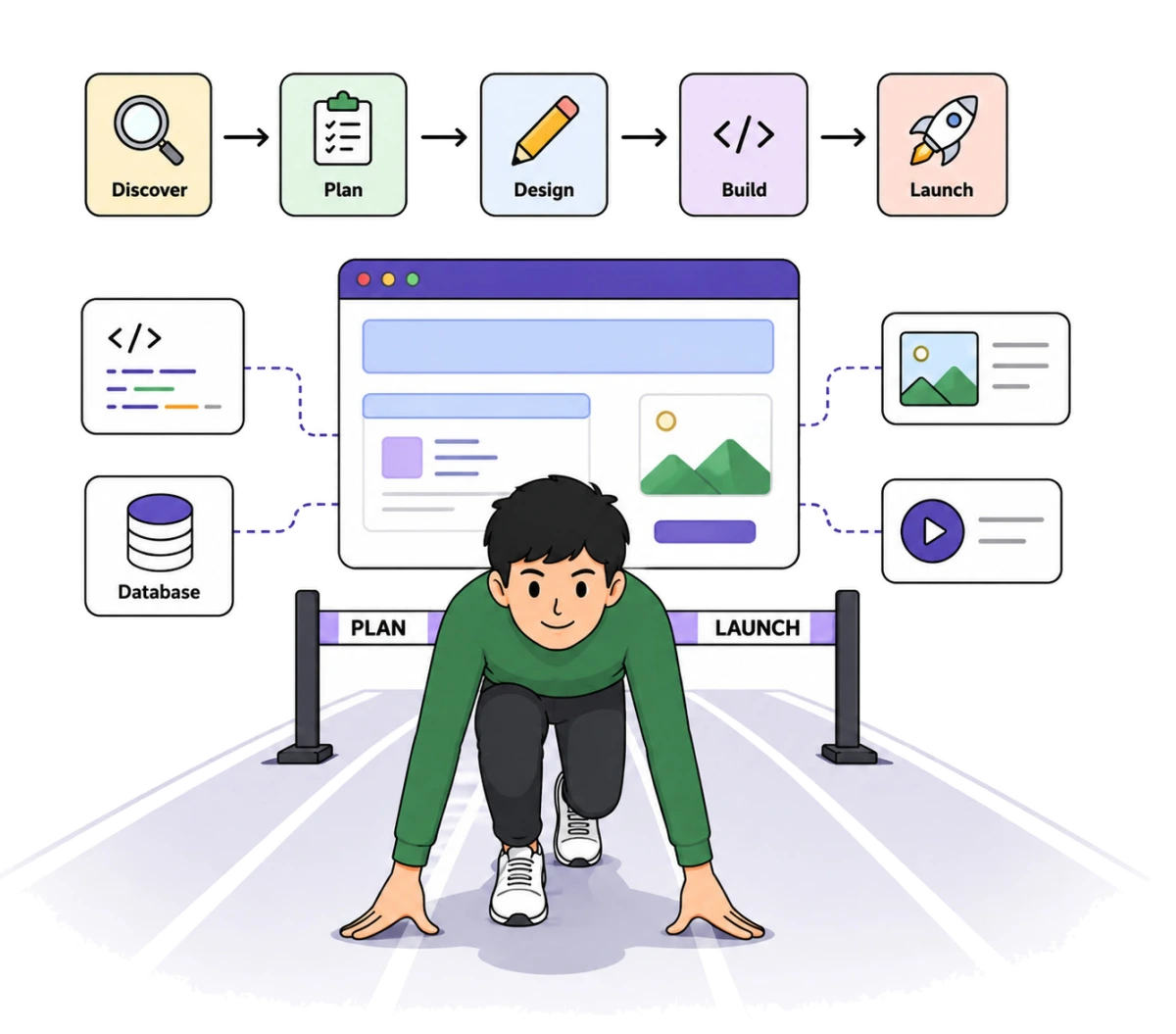
The journey · Onboarding → Engagement
Kickoff
A direct conversation with the senior partner who'll be working on your product. No account manager, no relays.
- Shared goals, known constraints, and what success looks like over the next six months.
- Access handover — repositories, Bubble app, third-party tools, and the humans who matter.
- A single shared workspace for decisions, documentation, and open questions from here on.
Structured audit
A thorough review of the app, the architecture, the integrations, and how the product is actually being used.
- Architecture review — data model, workflows, privacy rules, and any fragility creating cascading breakage.
- Performance and security profiling — pinpointing the few issues that genuinely matter versus the many that only look it.
- Interviews with your operators to understand where the product helps the business and where it holds it back.
Roadmap & priorities
Findings written up, priorities ranked, and a roadmap that front-loads the highest-impact work.
- A product health report covering the state of the architecture, the backlog, and the risks worth knowing about.
- A prioritised roadmap — what we fix first, what we stabilise next, and what we defer until the foundations are right.
- A decision log started on day one and maintained for the life of the engagement.
The engagement
A senior partner embedded in your product on a predictable cadence — not a vendor, not a ticket queue. The roadmap and decision log from week two are what the retainer runs on.
- Each week — focused development on the highest-impact items from the current roadmap, closed with a short written update: what shipped, what's queued, what changed.
- Each month — a product health report, a decision log review, and a checkpoint on roadmap direction. If priorities have shifted, the plan shifts with them.
- Each quarter — a longer review: what's working, what isn't, what we'd do differently. The goal is the relationship still earns its place after twelve months, not just six.
A clear picture, not a pitch deck.
Everything from the first two weeks is documented, shared, and yours to keep — whether you decide to continue or not. No pressure either direction.
- Product health report with honest, specific findings — not a generic checklist.
- Prioritised backlog with reasoning attached to every item.
- Architecture map of the system as it stands today.
- Decision log, started now and maintained through every subsequent change.
- A clear agreement on how we communicate, how often, and through which channels.
What the retainer actually buys you.
A senior partner on your product
You work directly with the person building it. No account managers, no junior teams, no mid-engagement handoffs.
Ongoing development and architecture
Every month's work is shaped around where the business is heading — not a ticket queue or a fixed scope spec.
Documentation as a deliverable
Architecture maps, decision logs, and module-level notes kept up to date alongside the code. You always know how your product works — and why.
Monthly product health report
An honest read on performance, security, stability, and the risks worth knowing about. Plain language, not a status dashboard.
Direct access when something matters
A shared workspace and a number you can actually reach. If an incident happens, you're not filing a ticket.
The parts nobody wants to ask about.
Stated plainly, up front.
Real improvement takes time. Short engagements don't produce the architectural depth that makes the work hold up.
No multi-year contracts, no penalty clauses, no paperwork. If GoldenAxe ever stops earning its place, leaving is simple.
You pay for continuity and judgment, not hours. Exact figures depend on the scope and seniority required — discussed openly on the first call.
Retainers that have run twelve months and counting.
Blueshirt and Aluvii have both been on a GoldenAxe retainer for over a year. The case studies go into what that's looked like in practice.