
Your Bubble app doesn't stop when the project ends. It keeps taking signups, moving money, running the workflows your team leans on every day. The only thing that stops at handover is the attention.
That gap — a live product, and nobody responsible for it — is where most Bubble apps quietly start to decay. Plugins fall behind. Workload units creep up. A workflow that was fine at 100 users starts timing out at 10,000. And the people who could explain why are already on someone else's project.
A retainer partner exists to close that gap. Build is just the beginning; partnership is what keeps it alive.
Prevent issues before they happen
Most maintenance is bought the expensive way: something breaks, a customer notices, and now it's an emergency at emergency rates — handled by whoever is available rather than whoever knows the app.
A retainer flips that order. Plugins get updated before the deprecated version fails. Workflows get checked before the edge case lands in production. Security rules get reviewed before the audit, not after the incident. The work is the same either way — prevention is just the version of it that doesn't cost you customers while it happens.
Optimize performance and costs
Bubble bills you for the work your app does, efficient or not. Unindexed searches, workflows that run more often than they need to, data calls that fetch a thousand records to display ten — none of it breaks anything. It just makes every month a little more expensive and every page a little slower.
Left alone, that's a bill that only moves in one direction. Watched monthly — workload units, response times, the queries behind them — it's usually the opposite: most established Bubble apps are carrying meaningful waste, and trimming it often covers a real share of the retainer that found it.
Keep your app always alive
An app your business runs on has a different bar than a side project: it has to work on Monday morning, every Monday morning. That means someone has to notice the failing API before your team does, apply the fix while it's small, and answer within hours — not "reach out and we'll scope a discovery call."
That responsiveness isn't something a project shop can sell you after the fact, because it depends on the next thing:
A partner who knows your app
The most expensive part of every one-off engagement is the ramp-up — a new team at senior rates, learning what already exists before they can safely touch anything.
A retainer partner pays that cost once. The team that answers your message is the team that built or rescued the app: they know why the database is shaped the way it is, which workflows are load-bearing, what the last three decisions were and what they were protecting. Every change lands faster and safer, and — because documentation is a deliverable, not an afterthought — the knowledge lives in decision logs and health reports you own, not in one developer's head.
Build → Launch → Grow
A project model treats launch as the finish line. For your business, launch is the starting line — everything the app was built to do happens after it.
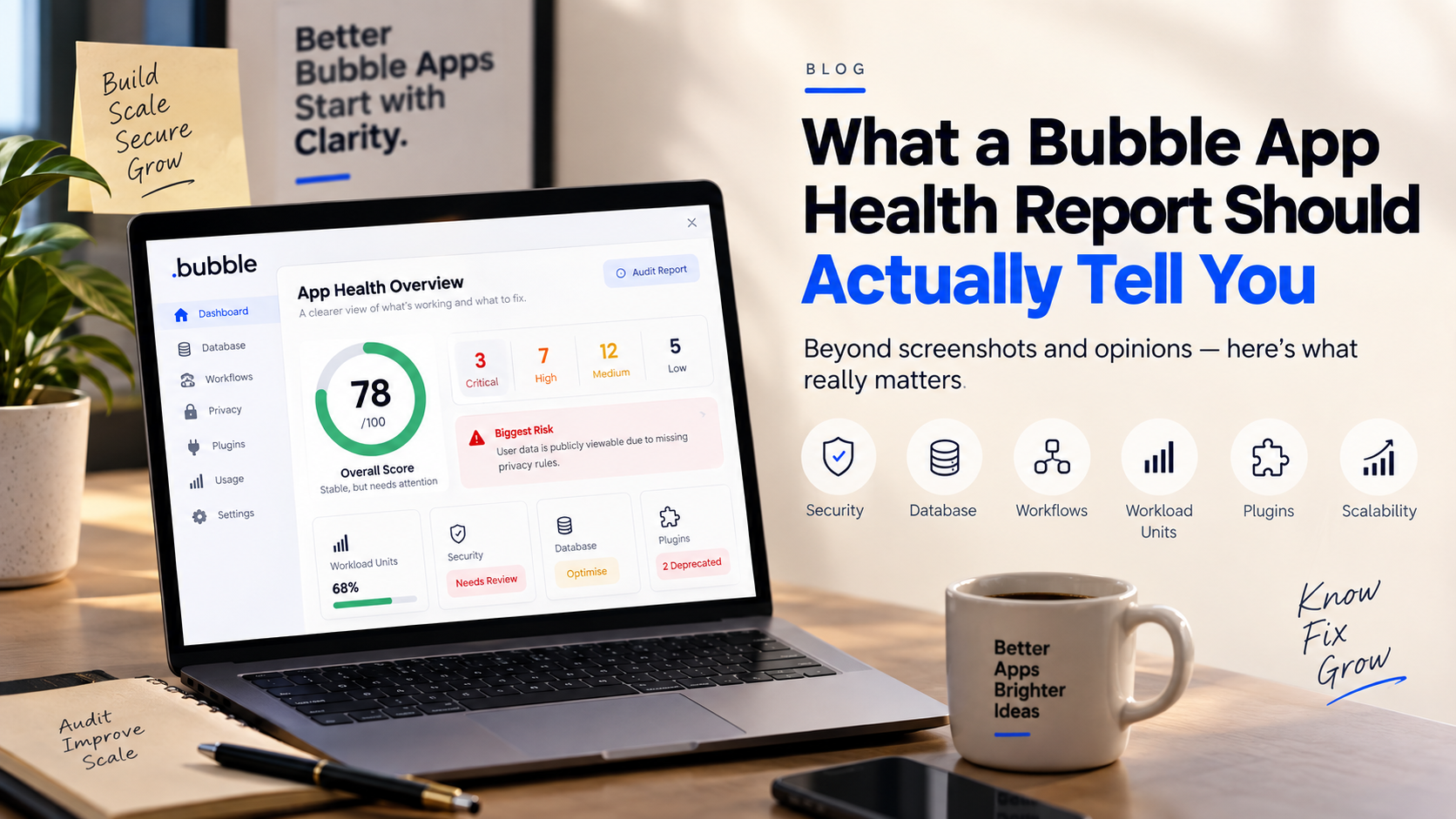
That's why the Forge Method doesn't end at Release: the stewardship that follows is the point. Monthly product health reports, quarterly roadmap reviews, one senior team that compounds knowledge of your product instead of resetting it. We stay, so you can grow.
The question isn't whether your Bubble app will need attention after launch. It's whether the people giving it will already know your app when it does.
If your app is already live and nobody's watching it, start with a free Bubble Health Score — a specialist reads its vitals and tells you exactly where it stands. No access needed, no catch.